What Is eTRU and How Does It Support Cleaner Cold Chain Operations?

Refrigerated transport is one of the most critical links in today’s supply chain, but it’s also among the most energy-intensive. For decades, diesel-powered transport refrigeration units (TRUs) have been the standard for keeping cargo at temperature in trailers and box trucks.

Now, as fuel costs climb and emissions standards tighten, the cold chain industry is shifting toward a cleaner, smarter solution: electric transport refrigeration units, known simply as eTRUs.

What Is an eTRU?

An electric transport refrigeration unit (eTRU) allows a refrigerated trailer or truck to maintain temperature by plugging into the local electrical grid instead of running its diesel engine.

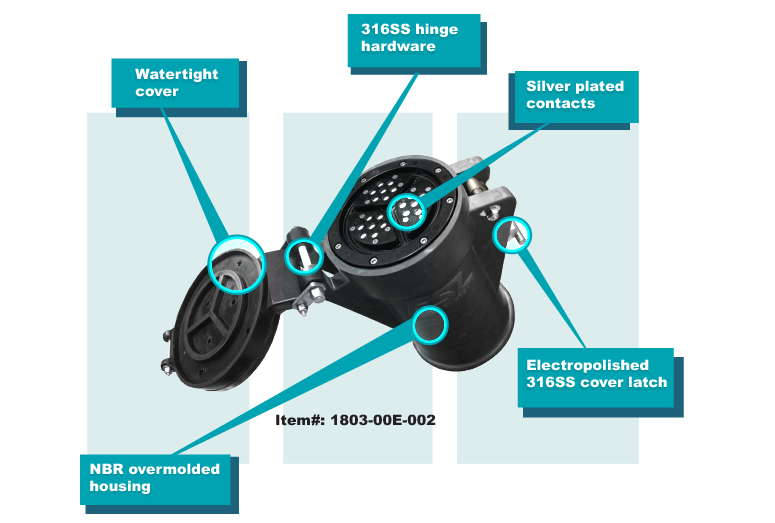
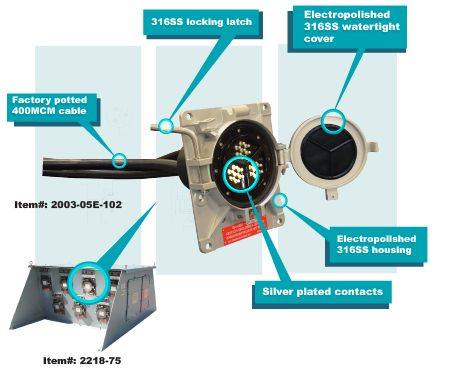
When connected to a truck shore power system such as ESL Power Systems’ eTRUconnect®, the TRU draws roughly 20kWof electricity, enough to power its cooling system efficiently while idle at a warehouse, terminal, or cold storage yard.

In short: eTRUs replace fuel burn with electricity, reducing emissions, operating costs, and maintenance, without compromising performance.oom for error. If a shore power connection fails, ships can’t run as planned and valuable cargo could be delayed or put at risk.

Why Electric Standby Matters for Fleets and Facilities

Every hour a diesel TRU idles, it burns close to a gallon of fuel and adds hours of engine wear. Switching to electric standby changes that equation:

  • 50–65% lower running costs compared to diesel
  • 20–30% longer engine life from reduced idle time
  • ROI in 12–18 months 

For distribution centers managing multiple trailers, these efficiencies translate into thousands in annual savings, and a faster path to sustainability compliance.

Check out our eTRU Webinar Series for a deeper look at fleet electrification, compliance planning, and real-world implementation strategies. 

Reducing Emissions and Meeting Compliance Goals

Electrifying TRUs has quickly become a key part of how fleets meet evolving emissions rules.
Agencies such as the California Air Resources Board (CARB) and local air districts (AQMD) are mandating cleaner operations across the supply chain.

Running TRUs on electricity instead of diesel helps facilities align with:

  • CARB’s Zero-Emission TRU Rule:  requiring new zero-emission TRUs by 2031–2035
  • AQMD Rule 2305:  reducing emissions from warehouses over 100,000 sq. ft.
  • Corporate sustainability initiatives linked to greenhouse-gas reduction targets

And there’s a community benefit too: electric standby eliminates noise pollution, improving air quality and working conditions for nearby residents and employees alike.

Sustainability That Pays Back

Electric standby systems aren’t just cleaner and cost efficient, they can generate revenue.

Through the Low Carbon Fuel Standard (LCFS), fleets that replace diesel with electricity earn credits for every kilowatt-hour used, typically worth $0.07–$0.10 per kWh. These credits can be reinvested into additional electrification projects or used to offset operating costs.

Across the U.S. and Canada, utilities also support truck shore power adoption with:

Regional incentives in states like California, Missouri, Texas, and Oregon

Infrastructure rebates covering design and installation

Up to 50% cost coverage on qualified equipment

Safety and Engineering Built for Real-World Use

Cold chain yards are tough environments exposed to weather, heavy traffic, and constant use. That’s why ESL’s eTRUconnect® is engineered for safety, compliance, and durability in the field:

  • UL/cUL Listed and NEC-compliant construction
  • Safety-interlocked connectors that disable power during disconnect
  • Dual drive-off protection that cuts power automatically if a trailer  pulls away.
  • Corrosion-resistant, NEMA 3R enclosures built for harsh conditions

These features protect both operators and equipment, helping facilities prevent downtime, avoid repairs, and maintain continuous operation.

For a deeper look at how eTRU systems operate and what to consider during implementation, check out our guide What You Need to Know About eTRU.

Future-Proofing the Cold Chain

Electrification doesn’t stop with hybrid TRUs. Battery-electric TRUs are the next step, and the infrastructure you install today lays the groundwork for that transition.

Facilities equipped with 240 V or 480 V eTRU systems already have the right platform for tomorrow’s charging systems. By planning ahead, operators can avoid costly retrofits while staying ahead of:

  • Stricter CARB emission mandates
  • Utility capacity upgrades
  • Customer and ESG reporting requirements
  • Future Products and technology that will require additional infrastructure

Forward-thinking facilities that electrify now will be best positioned to meet future standards, and win contracts with sustainability-focused shippers.

Did you know?

A regular eTRU can save about one gallon of diesel every hour when operating on electric standby. That translates to major cost and emissions savings, preventing roughly 20 pounds of CO₂ emissions for every gallon of diesel avoided, with facilities often seeing ROI in about a year.

Powering a Smarter, Cleaner Supply Chain

Adopting eTRU systems is one of the most practical ways fleets can cut emissions, control costs, and meet new regulations, all without disrupting operations.

With over 30 years of electrical engineering experience and more than 300,000 connection points deployed, ESL Power Systems provides proven, safety-certified solutions that help fleets electrify with confidence.

Ready to See What Electrification Could Mean for Your Facility?

Connect with our team to discuss power requirements, infrastructure options, and available incentives.

How Ships and Ports Integrate Clean Energy with Shore Power Connections

Modern ports are under increasing pressure to reduce emissions, meet regulatory standards, and improve sustainability. A shore power connection, sometimes called cold ironing or onshore power supply, enables docked vessels to plug into the local electrical grid instead of running their diesel engines.

This shift is more than a compliance requirement. It’s the foundation of port electrification. By adopting shore power, ports cut harmful emissions, reduce noise pollution, and deliver cleaner operations for surrounding communities. For vessels, the benefits are just as important, including lower fuel use, reduced maintenance, and easier compliance with evolving standards like CARB’s Shore Power Rule

The Cost of Getting It Wrong

While the advantages of shore power are clear, the risks of a poor implementation can be costly. Choosing the wrong system or underestimating compliance requirements may result in:

  • Delays and rework if systems fail to pass inspection.
  • Operational downtime when equipment isn’t engineered for heavy-duty port conditions.
  • Unexpected costs from non-standard components or proprietary connectors.
  • Regulatory penalties if ports or vessels fall short of emissions rules.

At a busy port, there’s no room for error. If a shore power connection fails, ships can’t run as planned and valuable cargo could be delayed or put at risk.

What to Look for in a Shore Power Solution

A port-ready solution should be engineered for safety, durability, and compliance. When evaluating a shore power connection, consider:

  • Regulatory compliance: Systems should meet CARB, IMO, NEC 555, and IEEE 80005 requirements.
  • Safety features: Look for interlocked connectors and clear field labeling.
  • Durability of design: Corrosion-resistant enclosures and weatherproof construction are essential.

Plan Your Shore Power Project With Confidence

Download our Commercial Shore Power Brochure to see features, compliance details, and planning tips.

Planning for Growth and Changing Regulations

Shore power isn’t just about meeting today’s rules. It’s about preparing for the future. Emissions standards are getting tougher, and more ports are moving toward zero-emission operations. By planning with customizable, expandable systems, ports can adapt to new vessel requirements, higher power needs, and stricter regulations without starting over.

Ports that plan ahead also gain an advantage. A strong shore power infrastructure makes them more attractive to shipping lines that are focused on meeting sustainability goals.

How ESL Simplifies Shore-to-Ship Integration

At ESL, we design and manufacture shore power connection systems that streamline electrification without compromise. Our solutions are:

  • Custom-engineered for each facility’s requirements.
  • Built for compliance, meeting CARB, IMO, and NEC standards.
  • Safety-focused, with interlocked connectors and built-in test points.
  • Scalable, with expandable configurations that adapt to future vessel needs.
  • Proven in the field, trusted by commercial, military, and cruise facilities across North America.

With more than 30 years of experience and over 300,000 connection points deployed, ESL helps ports, terminals, and engineering firms integrate shore power with confidence.

Power Your Port with Confidence

Don’t risk delays, downtime, or costly compliance failures. Partner with ESL for a shore power connection solution engineered to meet your specs, emissions goals, and growth plans.

What Does CARB Compliance Mean for Commercial Fleets and Facilities?

California’s CARB regulations have long shaped air quality standards in the U.S., and their influence is growing. As other states adopt similar rules and major retailers prioritize low-emission supply chains, commercial fleets and facilities across the country are under increasing pressure to align. For operations that rely on diesel-powered TRUs or manage temperature-controlled logistics, CARB compliance is now a strategic consideration, not just a regulatory requirement.

What Is CARB Compliance?

CARB, the California Air Resources Board, enforces some of the most aggressive air quality standards in the U.S., including regulations aimed at reducing emissions from diesel engines used in TRUs.

CARB compliance typically refers to:

  • Meeting emission standards for diesel-powered equipment
  • Reducing idling and reliance on diesel generators
  • Implementing zero-emission solutions such as electric standby systems or battery-electric TRUs

For fleets using refrigerated trailers, compliance means transitioning to clean alternatives such as plug-in shore power for temperature-controlled loads at distribution centers, truck yards, and cold storage facilities.

Why CARB Compliance Matters Beyond California

California may be first, but it won’t be last.

States like New York, Oregon, and Washington have already adopted similar emission goals, and major retailers are demanding cleaner supply chains. If you operate across state lines, your non-compliant equipment could soon be sidelined.

Key reasons this matters:

  • Regulatory momentum is spreading nationwide
  • Major logistics partners are prioritizing sustainable fleets
  • Non-compliance can limit bidding opportunities and facility access

Future-proofing isn’t optional—it’s essential.

Common Misconceptions About CARB Compliance

“This only affects California.”
False. Other states are aligning with CARB. Operating nationally means preparing now.

“We have to replace our entire fleet.”
Not necessarily. Many facilities can meet requirements with retrofits, shore power access, or dual-voltage capabilities.

“Compliance will cripple our operations.”
In truth, the right infrastructure can increase operational efficiency, reduce fuel costs, and even improve safety at the dock.

Think Compliance Is Too Costly? See the Real Numbers

Use our calculator to uncover how shore power can reduce diesel use, maintenance, and emissions—while keeping your fleet CARB compliant.

How to Stay Compliant Without Overbuilding

Too many fleets overspend chasing compliance. But smart planning and flexible infrastructure can reduce costs while still meeting requirements.

Here’s how:

  • Shore power systems like ESL’s eTRUconnect® allow electric TRUs to plug in when parked, reducing emissions, fuel use, and idling.
  • Dual-voltage systems support both 480V and 240V, accommodating mixed fleets without complex rewiring.
  • Modular, daisy-chain capable setups can power multiple units from one input, simplifying deployment and scaling with demand.
  • Break-away safety features and integrated compliance markings streamline inspection-readiness.

How ESL Helps Clients Align With CARB Requirements

At ESL, we help fleet operators and facility managers design smarter infrastructure that meets CARB requirements—without blowing the budget.

With over 30 years of experience, our solutions are:

  • Purpose-built for electric and hybrid TRU power
  • UL/cUL Listed with safety interlocks and rugged enclosures
  • Tested and proven in high-volume logistics environments
  • Custom-configured to your exact dock layout, voltage, and usage needs

Whether you’re just starting your compliance journey or looking to retrofit existing infrastructure, we provide the guidance, hardware, and ongoing support to move forward with confidence.

The Bottom Line

CARB compliance isn’t going away. But it doesn’t have to derail your operations.

With the right partners and technology in place, fleets and facilities can reduce emissions, lower costs, and stay ahead of evolving regulations.

Let’s Build the Right Compliance Solution for Your Fleet

Request a custom quote today and get the specs, pricing, and insight to move forward strategically.

NEC requirements for arc energy reduction for overcurrent protective devices 1,200 A or greater

Learning Objectives

  • Understand the basic requirements of NEC 240.87.
  • Know the importance of arc energy reduction methods and arcing current.
  • Learn how different arc energy reduction methods are calculated.
 

Arc energy insights

  • Low-voltage electrical systems and technology require electrical engineers to consider arc energy reduction.
  • Zone-selective interlocking systems detect high-level fault conditions, allowing instantaneous tripping in certain situations.
  • NFPA 70: National Electrical Code Article 240.87 is vital to electrical engineers working on these systems, as it discusses arc energy reduction.

Since its inclusion in the 2014 edition of the NFPA 70: National Electrical Code, known as NEC, multiple articles have been written in various publications discussing Article 240.87

While the 2014, 2020 and, to a lesser extent, the 2017 versions of the NEC are discussed in this article, any references to the NEC that do not indicate a specific year or edition refer to the 2023 version only. Essential to understanding how to meet the requirements of 240.87 is IEEE 1584: Guide for Performing Arc-Flash Hazard Calculations. Unless otherwise noted, any references to IEEE 1584 in this article refer to the latest version, 2018, and its subsequent addenda. NFPA 70E: Standard for Electrical Safety in the Workplace provides requirements for safe work practices, including those required by NEC 240.87. Additionally, 240.67 arc energy reduction for fuses will only be tangentially mentioned in this article.

Important edits and additions to the NEC’s arc energy reduction requirements include the following:

NEC 2017

  • Added 240.67, which requires arc energy reduction when fuses are 1,200 A or greater (240.87 is part of a section specific to circuit breakers).
  • Added instantaneous pickup and instantaneous override as options for arc energy reduction.

NEC 2020

  • Added clarification regarding arcing fault currents.
  • Added clarification that temporary instantaneous pickup adjustments are not satisfactory.
  • NEC 2023 included no major changes to 240.87.

240.87 states, “Where the highest continuous current trip setting for which the actual overcurrent device installed in a circuit breaker is rated or can be adjusted is 1,200 amperes or higher,” the three sub paragraphs shall apply. These three subparagraphs are (A) documentation, (B) method to reduce clearing time and (C) performance testing.

240.87(A) Documentation has, since its inception, been straightforward in requiring that information about the system be recorded and available to personnel authorized to work on the equipment. The 2020 version of the NEC added a sentence further detailing these requirements, requiring proof that whatever method is used for arc energy reduction works and is in use.

240.87(A) and 240.87(B) note that the arc energy reduction method “be set to operate at less than the available arcing current,” i.e., that the arc energy reduction system will actually operate based upon the specific system’s characteristics. The writer of this piece assumes these requirements were added to prevent the situation where an unscrupulous system operator would circumvent the intent of 240.87 (protecting personnel) by merely installing an arc energy reduction system but not actually having it operational.

It is important to note that the available arcing current is different from the more commonly encountered available short-circuit current. The available short-circuit current, often called the bolted-fault current, can be found at a given bus by reducing the electrical system to its Thevenin equivalent with zero fault impedance. The available arcing current is similar, with the addition of the impedance of a prospective arc included. At face value, this seems a simple calculation, but in practice, IEEE 1584 uses a selection of five different equations based on parameters such as the electrode configuration, nominal system voltage and electrode gap to determine. Arc flash analysis software can be used to accurately determine the arcing fault current.

It is also vital for personnel to understand that arc energy reduction at one overcurrent-protective device or bus is dependent not on that overcurrent protective device, but on the next overcurrent-protective device(s) upstream or on the line-side of that device. For feeder circuit breakers installed on a switchgear, this could be the main circuit breaker; for that same main circuit breaker, protection would need to be provided by the feeder circuit breaker or relay feeding the main. Exceptions to this may include certain types of energy-reducing active arc flash mitigation systems that reduce the fault energy without the assistance of overcurrent protective devices tripping.

240.87(B) provides a list of acceptable means to reduce arc energies, including: zone-selective interlocking, differential relaying, energy-reducing maintenance switching with local status indicator, energy-reducing active arc flash mitigation system, a permanent instantaneous trip setting, an instantaneous override or an approved equivalent means. Each of these methods, including their advantages and disadvantages, is discussed in the following paragraphs. Note that, as stated earlier, all the methods must be set to operate below the available arcing current.
Zone-selective interlocking

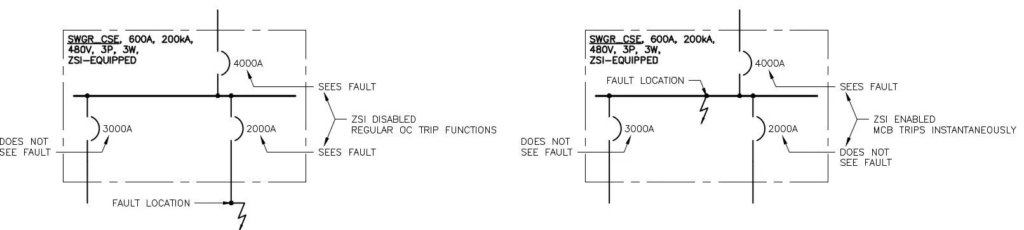
ZSI is, at its most simple, a communication system. Overcurrent protective devices are connected such that they communicate with each other when they pick up or “see” a high-level fault condition, allowing instantaneous tripping in certain situations. If both a feeder overcurrent protective device and an upstream main overcurrent protective device pickup on a fault current, the system will operate as usual (i.e., if properly coordinated, the feeder breaker will first attempt to trip the fault). If that same main overcurrent protective device picks up a fault current but none of its associated feeder overcurrent protective device do, the main overcurrent protective device will trip with no intentional delay, regardless of its short-time or instantaneous pickup settings/delays. ZSI systems are generally most common in switchgear systems and can be moderately expensive, especially when interlocking feeder circuit breakers from one switchgear with overcurrent protective devices of a separate switchgear. ZSI is often installed in new switchgear installations. Figure 1 presents a basic visual of a ZSI system for (a) a fault within the ZSI-protected zone and (b) a fault outside the ZSI-protected zone.

Advantages: Fast-acting, allows intelligent zone isolation and selective coordination.

Disadvantages: Moderately expensive, requires interlocking wiring and more advanced circuit breakers, may not be an option between different busses and may not work across multiple manufacturers.

Differential relaying

Differential Relay (ANSI device No. 87) has been used for decades to efficiently detect and isolate faults within a zone of protection, whether that be a bus, cable, transformer or other equipment. As the name implies, if the difference in value between the currents entering and exiting a node is not zero or within a prescribed setting, the relay will trip all such devices. Differential relaying, due to its cost, is usually restricted to large or critical switchgear, transformer, motor or generator systems.

Advantages: Extremely fast-acting, does not impact selective coordination. Modern relay systems provide some security against nuisance tripping.

Disadvantages: Expensive — each circuit requires current transformers and associated wiring; current transformers must be properly matched and/or of sufficient quality and size to prevent through-fault nuisance tripping.
Energy-reducing maintenance switching with local status indicator

Maintenance switching with local status indication generally involves a physical switch and light installed on a piece of equipment. If personnel are going to work on said equipment energized, they would toggle the switch, which would send a signal to the next upstream overcurrent protective device to lower its instantaneous settings to minimum. This allows for a system to maintain coordination under normal operating conditions while also limiting arc hazards to personnel during maintenance or other activities.

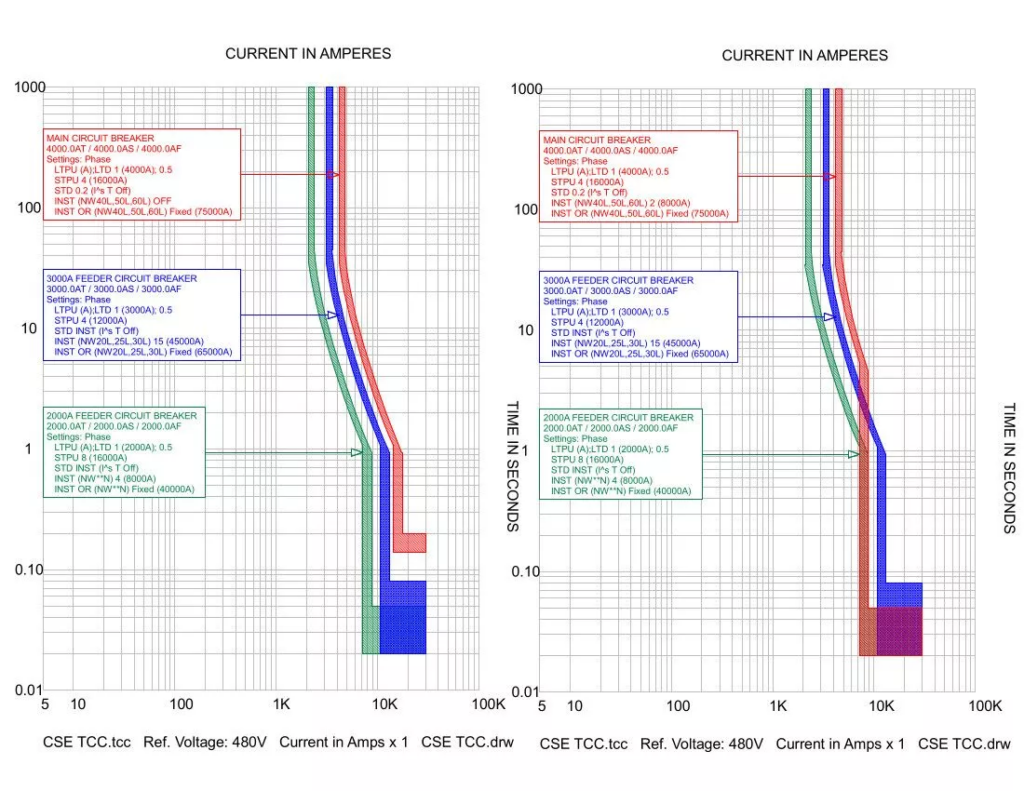
It is important to reiterate that to be effective, the maintenance switch must lower the instantaneous setting of the upstream overcurrent protective device, not of the device in the cubicle or equipment associated with the work. Maintenance switching is often found in new switchgear installations, though can be retrofitted into existing systems. Figure 2 presents a basic time-current curve for a circuit breaker system with maintenance switching (a) inactive and (b) active.

Advantages: Relatively cheap compared to the other arc reduction options, excepting instantaneous trip/override; may be installed in new or existing systems; provides both selective coordination and personnel protection.

Disadvantages: Relies on administrative controls to ensure personnel use the system properly for protection — if the system is not engaged when working on equipment, the personnel may not be protected. If the system is not disengaged after work is complete, the system may experience nuisance tripping. In theory, the local status indicator should limit such occurrences, but anecdotally, the latter can be common.

Arc energy-reducing active arc flash mitigation system

Multiple types of energy-reducing active arc flash mitigation systems exist. One of the most common is an arc flash relay system, which normally uses both light sensors and overcurrent pickup to detect an arc flash event and isolate the equipment. Such systems have been around for over a decade and can generally be installed in both new and existing equipment.

Another type of active arc flash mitigation system is the ultrafast earthing switch, which introduces a controlled three-phase line-to-ground fault when sensing arc fault conditions; this fault (of essentially zero impedance) effectively redirects the fault current to an area where it can be contained in a safe manner. UFES systems have advanced greatly in recent years, going from large contraptions that are little more than electrodes fired from shotgun shells into the ground to units that can be installed as parts integral to a switchgear setup.

Arc-quenching is a third type of active arc flash mitigation system that is similar to the arc flash relay system in structure — light sensors and current transformers — and the UFES system in response time. Whereas UFES systems introduce a controlled three-phase bolted fault, arc-quenching systems introduce current-limiting devices to control and redirect the fault current.

Advantages: Regardless the technology, active arc flash mitigation systems provide extremely quick response times to detect and/or isolate an arc. Additionally, while passive arc energy reduction systems — specifically arc-rated equipment — only contain an arc when the exterior doors are closed, active arc energy reduction systems operate irrespective of whether the equipment is open or closed.

Disadvantages: Cost, especially for a UFES system can be high. While an arc flash relay system is little more than point sensors and/or fiber optic cable coupled with standard overcurrent relays (where possible, using CTs and relays already installed) a UFES system is sacrificial in nature. New systems have been developed that contain the introduced fault into a chamber that can be replaced, the replacement equipment can still be expensive.

A permanent instantaneous trip setting or instantaneous override for arc energy

“Permanent” was added by this author to highlight a key aspect of this requirement that “temporary adjustment of the instantaneous trip setting to achieve arc energy reduction shall not be permitted.” While essentially the same in electrical characteristics as the energy-reducing maintenance switching method, temporary adjustment of the instantaneous setting does not provide the same controls that would ensure the personnel adjusted the correct overcurrent protective device or that other personnel may have unknowingly “corrected” the temporarily adjusted setting.

Advantages: As most overcurrent protective devices rated for 1,200 A or greater have an adjustable instantaneous setting, this method (along with the instantaneous override method) likely provides the cheapest and most common means of reducing arc energy.

Disadvantages: As overcurrent protective devices have the twofold and often opposed goals of increasing system coordination and reducing system arc energies, it may not be possible for an instantaneous trip setting to be set low enough to interrupt the arcing fault current.

An instantaneous override is essentially the maximum instantaneous pickup of a circuit breaker and is not an adjustable setting. Refer to the instantaneous trip setting paragraph above for application details.

An approved equivalent means — as the industry’s understanding of arc flash continues to grow and mature, new and novel means of arc energy reduction will likely continue to be developed.

240.87(C) Performance testing requires the arc energy reduction system be tested when first installed to prove its efficacy. Primary current injection (i.e., testing the whole overcurrent detection system, not only the circuit breaker or relay inputs) or another approved method is required. For most arc energy reduction systems, the testing is different from usual overcurrent testing: introduce a current in the primary system and observe how long it takes the system to send a trip signal. Some systems, such as those that use light-sensing, would need additional testing.

Ultimately, the choice of which arc energy reduction system to use is dependent on a number of factors unique to every system, including the type of equipment, the personnel that will operate and maintain it, cost constraints, etc. In many cases, instantaneous settings may provide adequate reduction of arc flash energy while still maintaining coordination. Where that is not possible, the other arc energy reduction options become necessary.

 
View the original article and related content on Consulting Specifying Engineer

Hurricane Season: Keep Your Facility In-Service

Hurricane

According to the 2020 outlook released by NOAA’s Climate Prediction Center, the Atlantic hurricane season is predicted to be more active than usual. The 2020 NOAA outlook calls for:

  • 13 to 19 named storms
  • Six to 10 hurricanes
  • Three to six major hurricanes – one that is Category 3 or higher!

Prepare your business

When hurricanes, high winds and heavy rain form, business such as banks, gas stations and grocery stores may shut down for prolonged periods of time. When businesses close their doors due to natural disasters, owners can lose big, in both sales and reputation..

More recently, business owners are evaluating the overall cost impact of when their business loses power during an emergency, disaster, or inclement weather. They question is if they could continue to operate and be without power for 1hr, 12hr, 24hr, or even 3 days.

With this in mind, many of today’s business owners are opting to invest in their own backup power systems, doing all they can to keep their doors open when disaster strikes and grid power fails.

ESL’s knowledgeable Emergency Power Solutions team has been helping business owners determine what equipment is best for their facility and budget for over two decades. ESL offers multiple resources for determining what Emergency Power Connection equipment is right for your business. You can contact us, research our products online and read articles about how other customers have determined what’s right for them.