What Is eTRU and How Does It Support Cleaner Cold Chain Operations?

Refrigerated transport is one of the most critical links in today’s supply chain, but it’s also among the most energy-intensive. For decades, diesel-powered transport refrigeration units (TRUs) have been the standard for keeping cargo at temperature in trailers and box trucks.

Now, as fuel costs climb and emissions standards tighten, the cold chain industry is shifting toward a cleaner, smarter solution: electric transport refrigeration units, known simply as eTRUs.

What Is an eTRU?

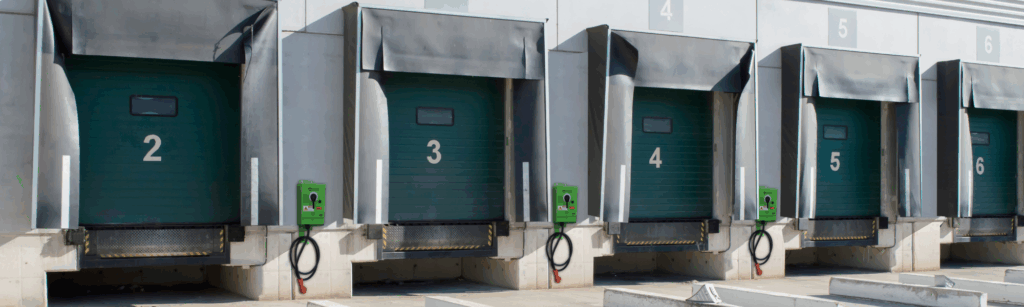
An electric transport refrigeration unit (eTRU) allows a refrigerated trailer or truck to maintain temperature by plugging into the local electrical grid instead of running its diesel engine.

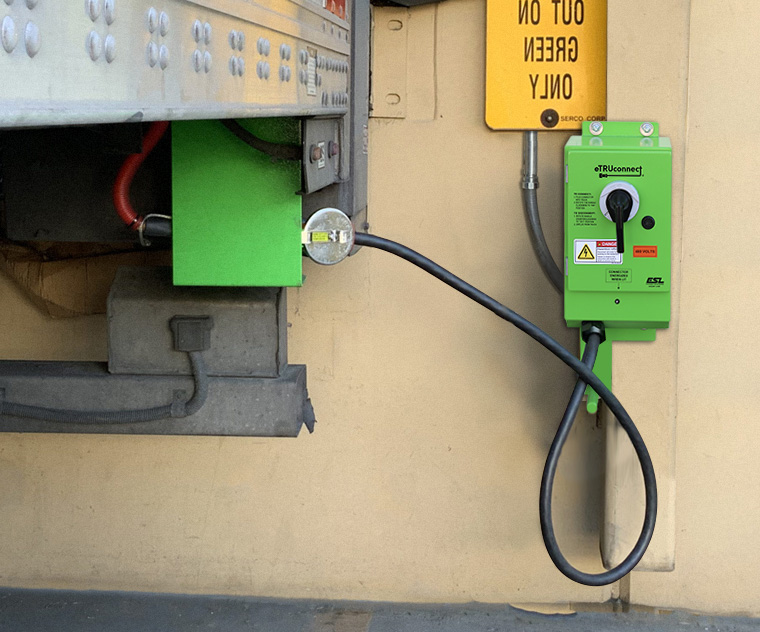
When connected to a truck shore power system such as ESL Power Systems’ eTRUconnect®, the TRU draws roughly 20kWof electricity, enough to power its cooling system efficiently while idle at a warehouse, terminal, or cold storage yard.

In short: eTRUs replace fuel burn with electricity, reducing emissions, operating costs, and maintenance, without compromising performance.oom for error. If a shore power connection fails, ships can’t run as planned and valuable cargo could be delayed or put at risk.

Why Electric Standby Matters for Fleets and Facilities

Every hour a diesel TRU idles, it burns close to a gallon of fuel and adds hours of engine wear. Switching to electric standby changes that equation:

  • 50–65% lower running costs compared to diesel
  • 20–30% longer engine life from reduced idle time
  • ROI in 12–18 months 

For distribution centers managing multiple trailers, these efficiencies translate into thousands in annual savings, and a faster path to sustainability compliance.

Check out our eTRU Webinar Series for a deeper look at fleet electrification, compliance planning, and real-world implementation strategies. 

Reducing Emissions and Meeting Compliance Goals

Electrifying TRUs has quickly become a key part of how fleets meet evolving emissions rules.
Agencies such as the California Air Resources Board (CARB) and local air districts (AQMD) are mandating cleaner operations across the supply chain.

Running TRUs on electricity instead of diesel helps facilities align with:

  • CARB’s Zero-Emission TRU Rule:  requiring new zero-emission TRUs by 2031–2035
  • AQMD Rule 2305:  reducing emissions from warehouses over 100,000 sq. ft.
  • Corporate sustainability initiatives linked to greenhouse-gas reduction targets

And there’s a community benefit too: electric standby eliminates noise pollution, improving air quality and working conditions for nearby residents and employees alike.

Sustainability That Pays Back

Electric standby systems aren’t just cleaner and cost efficient, they can generate revenue.

Through the Low Carbon Fuel Standard (LCFS), fleets that replace diesel with electricity earn credits for every kilowatt-hour used, typically worth $0.07–$0.10 per kWh. These credits can be reinvested into additional electrification projects or used to offset operating costs.

Across the U.S. and Canada, utilities also support truck shore power adoption with:

Regional incentives in states like California, Missouri, Texas, and Oregon

Infrastructure rebates covering design and installation

Up to 50% cost coverage on qualified equipment

Safety and Engineering Built for Real-World Use

Cold chain yards are tough environments exposed to weather, heavy traffic, and constant use. That’s why ESL’s eTRUconnect® is engineered for safety, compliance, and durability in the field:

  • UL/cUL Listed and NEC-compliant construction
  • Safety-interlocked connectors that disable power during disconnect
  • Dual drive-off protection that cuts power automatically if a trailer  pulls away.
  • Corrosion-resistant, NEMA 3R enclosures built for harsh conditions

These features protect both operators and equipment, helping facilities prevent downtime, avoid repairs, and maintain continuous operation.

For a deeper look at how eTRU systems operate and what to consider during implementation, check out our guide What You Need to Know About eTRU.

Future-Proofing the Cold Chain

Electrification doesn’t stop with hybrid TRUs. Battery-electric TRUs are the next step, and the infrastructure you install today lays the groundwork for that transition.

Facilities equipped with 240 V or 480 V eTRU systems already have the right platform for tomorrow’s charging systems. By planning ahead, operators can avoid costly retrofits while staying ahead of:

  • Stricter CARB emission mandates
  • Utility capacity upgrades
  • Customer and ESG reporting requirements
  • Future Products and technology that will require additional infrastructure

Forward-thinking facilities that electrify now will be best positioned to meet future standards, and win contracts with sustainability-focused shippers.

Did you know?

A regular eTRU can save about one gallon of diesel every hour when operating on electric standby. That translates to major cost and emissions savings, preventing roughly 20 pounds of CO₂ emissions for every gallon of diesel avoided, with facilities often seeing ROI in about a year.

Powering a Smarter, Cleaner Supply Chain

Adopting eTRU systems is one of the most practical ways fleets can cut emissions, control costs, and meet new regulations, all without disrupting operations.

With over 30 years of electrical engineering experience and more than 300,000 connection points deployed, ESL Power Systems provides proven, safety-certified solutions that help fleets electrify with confidence.

Ready to See What Electrification Could Mean for Your Facility?

Connect with our team to discuss power requirements, infrastructure options, and available incentives.

What Does CARB Compliance Mean for Commercial Fleets and Facilities?

California’s CARB regulations have long shaped air quality standards in the U.S., and their influence is growing. As other states adopt similar rules and major retailers prioritize low-emission supply chains, commercial fleets and facilities across the country are under increasing pressure to align. For operations that rely on diesel-powered TRUs or manage temperature-controlled logistics, CARB compliance is now a strategic consideration, not just a regulatory requirement.

What Is CARB Compliance?

CARB, the California Air Resources Board, enforces some of the most aggressive air quality standards in the U.S., including regulations aimed at reducing emissions from diesel engines used in TRUs.

CARB compliance typically refers to:

  • Meeting emission standards for diesel-powered equipment
  • Reducing idling and reliance on diesel generators
  • Implementing zero-emission solutions such as electric standby systems or battery-electric TRUs

For fleets using refrigerated trailers, compliance means transitioning to clean alternatives such as plug-in shore power for temperature-controlled loads at distribution centers, truck yards, and cold storage facilities.

Why CARB Compliance Matters Beyond California

California may be first, but it won’t be last.

States like New York, Oregon, and Washington have already adopted similar emission goals, and major retailers are demanding cleaner supply chains. If you operate across state lines, your non-compliant equipment could soon be sidelined.

Key reasons this matters:

  • Regulatory momentum is spreading nationwide
  • Major logistics partners are prioritizing sustainable fleets
  • Non-compliance can limit bidding opportunities and facility access

Future-proofing isn’t optional—it’s essential.

Common Misconceptions About CARB Compliance

“This only affects California.”
False. Other states are aligning with CARB. Operating nationally means preparing now.

“We have to replace our entire fleet.”
Not necessarily. Many facilities can meet requirements with retrofits, shore power access, or dual-voltage capabilities.

“Compliance will cripple our operations.”
In truth, the right infrastructure can increase operational efficiency, reduce fuel costs, and even improve safety at the dock.

Think Compliance Is Too Costly? See the Real Numbers

Use our calculator to uncover how shore power can reduce diesel use, maintenance, and emissions—while keeping your fleet CARB compliant.

How to Stay Compliant Without Overbuilding

Too many fleets overspend chasing compliance. But smart planning and flexible infrastructure can reduce costs while still meeting requirements.

Here’s how:

  • Shore power systems like ESL’s eTRUconnect® allow electric TRUs to plug in when parked, reducing emissions, fuel use, and idling.
  • Dual-voltage systems support both 480V and 240V, accommodating mixed fleets without complex rewiring.
  • Modular, daisy-chain capable setups can power multiple units from one input, simplifying deployment and scaling with demand.
  • Break-away safety features and integrated compliance markings streamline inspection-readiness.

How ESL Helps Clients Align With CARB Requirements

At ESL, we help fleet operators and facility managers design smarter infrastructure that meets CARB requirements—without blowing the budget.

With over 30 years of experience, our solutions are:

  • Purpose-built for electric and hybrid TRU power
  • UL/cUL Listed with safety interlocks and rugged enclosures
  • Tested and proven in high-volume logistics environments
  • Custom-configured to your exact dock layout, voltage, and usage needs

Whether you’re just starting your compliance journey or looking to retrofit existing infrastructure, we provide the guidance, hardware, and ongoing support to move forward with confidence.

The Bottom Line

CARB compliance isn’t going away. But it doesn’t have to derail your operations.

With the right partners and technology in place, fleets and facilities can reduce emissions, lower costs, and stay ahead of evolving regulations.

Let’s Build the Right Compliance Solution for Your Fleet

Request a custom quote today and get the specs, pricing, and insight to move forward strategically.

Understanding the Electrical Differences Between Reefer Containers and eTRUs: Why Precise Identification Matters

Generic terms like reefer, van, or freezer are often used to describe a variety of refrigerated equipment, but each type can have different electrical requirements. To ensure we quote the correct product, it’s important to understand exactly what kind of equipment will be plugged in.

Reefer Containers: The Ocean and Intermodal Workhorses

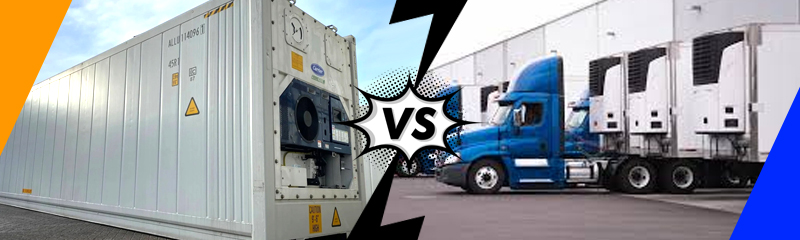
Reefer containers are typically used for ocean or intermodal shipping and come with a built-in cord and a male pin-and-sleeve plug, usually 440/480V 3-phase, 32A (IEC 60309). These cords are often visible coiled in a tray or hook on the container’s side. The container itself is a self-contained metal unit, similar in appearance to a standard shipping container, often 20 or 40 feet long.

Electric Transport Refrigeration Units (eTRUs): The Overland Option

Electric Transport Refrigeration Units (eTRUs), on the other hand, are usually mounted on trailers or trucks. Instead of a cord, they are equipped with a male inlet mounted on the unit’s exterior. The cord with the female connector is provided at the power source (dock, pedestal, or building).

Visually, eTRUs blend into the body of the trailer or appear as nose-mounted units on the front wall. At first glance, they may look like conventional diesel-powered TRUs, but the giveaway is the small inlet plate or recessed power port replacing the familiar fuel tank.

Quick visual differences:

  • Reefer Containers: Large, box-like units with a coiled power cord and male plug. Often have corner castings for stacking/shipping.
  • eTRUs: Mounted on trailers, often with no external cord. Look for an inlet plate or recessed power port on the side or front of the unit.

Why This Matters for Electrical Quotes

It’s important to note that not all containers or eTRUs use the same standard configuration. Some may have non-standard connectors or voltages depending on origin, manufacturer, or retrofit. Since pricing and product selection can vary significantly depending on the required connector or receptacle, confirming the exact electrical configuration — including voltage, phase, amperage, and plug type — helps avoid misunderstandings and ensures a safe, cost-effective solution.

Photos of the connection point, nameplate data, or equipment specifications are very helpful in making the correct selection.

If you’re looking for further assistance or ready for a project quote, Contact our team now!

Range Energy and ESL Power Systems Partner to Advance Shore Power Charging Solutions for Electric TRUs and Trailers

Under the partnership, Range is evaluating the interoperability and use of ESL’s shore power and charging solutions to advance the commercial adoption of electric trailers 

Mountain View, Calif. — April 23, 2025— Range Energy, a pioneer in commercial trucking electrification, today announced a partnership with ESL Power Systems, Inc. (ESL), a manufacturer of safe and reliable shore power and electric TRU charging solutions, to provide affordable, practical, and scalable charging solutions for Range’s advanced eTrailer System, which turns large diesel trucks to hybrid-electric. The partnership concretely highlights the opportunity to leverage existing shore power infrastructure and affordable charging hardware to support the transition of commercial trucking fleets transition to electric and hybrid-electric operations

As part of the collaboration, Range will work towards adding an ESL charging solution to its portfolio of practical electrification offerings. In preparation for this, the companies will conduct interoperability testing, ensuring seamless integration and optimizing charging efficiency electrified trailers. 

Additionally, Range and ESL will engage with air quality regulators on projects to demonstrate the commercial feasibility of using the Range system in real-world operations, as well as to showcase the environmental and operational benefits of electrified transport refrigeration unit (TRU) fleets operating within California. 

To support this, ESL will contribute 480V 3-phase charging hardware for installation at fleet sites, which will be used throughout the duration of the demonstration projects. Following completion of the projects, the chargers will be owned by the relevant fleet sites, further supporting long-term zero-emission electric fleet operations. 

“Collaborating with ESL represents a critical step towards electric and hybrid-electric commercial fleet operations,” said Ali Javidan, CTO and founder, Range Energy. “By demonstrating the real-world feasibility of affordable alternating current (AC) charging to support electric and hybrid-electric fleet operations, we are proving that practical electrification solutions exist today.”

“Fleet operators are increasingly looking for dependable and scalable charging infrastructure to support electrified operations. We are fulfilling that need by providing a high-performance charging solution that enables Range’s system to seamlessly integrate into fleets’ daily operations,” said Jonathan Daou, Product Manager, ESL. “This is important to ensure that the integration of electric equipment doesn’t negatively impact fleet operations, while simultaneously supporting commercial trucking’s transition to electric power for a more sustainable future.” 

About Range Energy

Range Energy accelerates the electrification of commercial transportation through its innovative system that converts diesel trucks to hybrid electric, enabling fleets to transition to electric transportation with no operational disruption. Designed to integrate seamlessly with any commercial tractor-trailer, Range’s integrated hardware and software delivers immediate fuel efficiency gains, lower emissions, and enhanced vehicle performance and safety. The system also provides electric power for refrigerated trailers, which is critical for operators to reduce diesel costs. Founded in 2021, Range Energy is backed by leading investors, including UP Partners, R7, Yamaha Motor Ventures, and others.

For more information, visit https://range.energy.

About ESL

For over 30 years, ESL has provided more than 300,000 electrical connection points worldwide across various industries, supporting their clean energy initiatives. As a leader in developing, manufacturing, and integrating advanced power system solutions for the electric vehicle (EV) charging industry and renewable energy applications, ESL offers a robust portfolio ranging from high-efficiency charging stations to innovative power management systems—driving the future of sustainable transportation.  

For more information, visit our eTRUconnect® Shore Power System for electric and hybrid refrigerated trailers product page.

Media Contact:
Kate Gundry
range@pluckpr.com 
617-797-5174

Erika Thorson
ethorson@eslpwr.com
951-739-7000

ESL and Elonroad Partner to Develop Charging Solutions for ETRU Market

Corona, CA and Lund, Sweden — May 2024 — ESL and Elonroad are pleased to announce their partnership aimed at developing innovative automatic charging solutions for essential businesses and supply chains. The collaboration will focus on leveraging Elonroad’s automatic charging technology and ESL’s expertise in power system solutions to electrify the future of transportation sustainably.

The partnership signifies a strategic move by both companies to address the growing need for efficient and climate-friendly charging solutions, particularly within the Electric Transport Refrigeration Unit (ETRU) market, including refrigerated trucks, trailers, and warehouses. This collaboration also marks Elonroad’s introduction to the U.S. market, introducing the availability of cutting-edge automatic charging solutions.

The joint venture will kickstart with a pilot program, set to commence in mid-2024 and conclude by Q1 2025. This U.S. market initiative aligns with the shared vision of both parties to revolutionize the transportation sector and reduce dependence on fossil fuels.

Carlos Valero, Chief Operating Officer of ESL, highlighted the synergies between the two companies, stating, ” Elonroad’s unique automatic charging solutions significantly decrease CO2 impact and lowers the total cost of ownership, offering the flexibility to charge electric vehicles whether on the move or parked. This innovation aligns with ESL’s commitment to providing sustainable solutions that drive environmental benefits while meeting the evolving needs of the transportation industry. Together, we aim to redefine the future of our markets.”

Karin Ebbinghaus, CEO of Elonroad, expressed her thoughts on the partnership, saying, “We recognize ESL as an industry leader, and partnering with them in the U.S. market is a key strategic move for Elonroad. Through this collaboration, we are thrilled to forge a path toward a positive future where sustainable practices and safety for all involved are paramount. This partnership not only underscores our commitment to climate-consciousness but also signifies a significant step towards redefining industry standards. We look forward to the innovative solutions and positive impact our combined efforts will bring to the transportation sector and beyond.”

Elonroad specializes in charging solutions for electric vehicles, catering to various segments such as commercial, private, light, and heavy vehicles, both autonomous and human-operated. Working with, amongst others, one of the leaders within circular services, in addition also building the first electric highway together with VINCI outside Paris, France. Meanwhile, ESL is renowned for its advanced power system solutions in the electric vehicle charging industry and renewable energy applications.

The partnership between ESL and Elonroad marks a significant step towards sustainable transportation and underscores their commitment to innovation and environmental stewardship.

About ESL

ESL is a leader in developing, manufacturing, and integrating advanced power system solutions for the electric vehicle (EV) charging industry and renewable energy applications. With a robust portfolio that includes everything from high-efficiency charging stations to innovative power management systems, ESL is at the forefront of supporting sustainable transportation.

About Elonroad

Elonroad, a Swedish cleantech company, aims to streamline energy flow using their innovative technology for Electric Roads (ERS) and automated charging stations, targeting industries like logistics and ports. Their technology, which integrates conductive charging into road surfaces, enables vehicles to charge while moving or parked. Enhanced with IoT sensors, the system optimizes charging, improves safety, and operates efficiently 24/7 while also reducing CO2 emissions. Elonroad collaborates with major partners like logistics company Elis and global supplier of automotive components Aisin and is currently working on the first electric highway on the A10 highway outside Paris, France. Elonroad’s charging solutions support all types of electric vehicles—commercial or private, light or heavy, autonomous or manual—further expanding their reach and impact in the shift towards sustainable transportation.

Learn more about the conductive charging pilot program!

For media inquiries, please contact:

Erika Thorson, Marketing Manager, ESL

ethorson@eslpwr.com

+1 (951) 739-7000

Karin Ebbinghaus, CEO, Elonroad

Karin@elonroad.com

+ 46 70 339 55 42