Specifying Hospital Emergency Power Interfaces: A Safety-First, Code-Compliant Q & A Guide for Engineers

Safer, code-compliant power interfaces engineered to your site for critical facilities.

Hospitals rely on uninterrupted power to sustain life-support systems, surgical environments, and critical infrastructure. Even a momentary loss of power can compromise patient safety, making system reliability and fail-safe operation non-negotiable.

Emergency power systems are specifically designed to protect life and property during outages by providing an independent power source when normal utility power fails.

Healthcare environments face stricter requirements than most industries because power loss directly impacts patient outcomes and safety


What Specifying Engineers Need to Get Right in Hospital Emergency Power Systems

Hospital emergency power systems are not just infrastructure; they are life safety systems. For specifying engineers, the responsibility goes beyond meeting code. It includes ensuring:

  • Safe operation under real-world conditions
  • Elimination of human-error risk
  • Reliable performance during critical events

Q: What is the engineer’s primary responsibility when specifying EPSS equipment?

A: To ensure the system is not only code-compliant, but also safe, operable, and aligned with the facility’s real-world conditions.


What Codes Directly Impact Emergency Power Specifications?

Healthcare power systems are governed by multiple overlapping standards:

  • NEC Article 517 (NFPA 70) – Defines Essential Electrical Systems (EES)
  • NFPA 110 – Performance requirements for emergency power supply systems
  • NFPA 99 – Risk categories and healthcare facility requirements
  • NFPA 101 – Life safety considerations

Q: Why is code compliance not enough?

A: Codes define minimum requirements, but they do not address all operational risks, especially those related to human interaction and system misuse.


Where Standard Specifications Fall Short in Healthcare Applications

Many emergency power specifications rely on generic or legacy language, which can introduce risk.

Q: What risks are commonly overlooked in standard specs?

A:

  • Operator error during switching
  • Unsafe or unintended backfeeding
  • Misaligned connectors or configurations
  • Lack of clarity in operating procedures

Key Insight:

👉 Most failures don’t happen in equipment; they happen at interaction points.


Designing for Human Error Prevention in Critical Power Systems

In hospital environments, manual interaction is unavoidable and that’s where risk concentrates.

Q: Where do the highest risks occur?

A:

  • Temporary generator connections
  • Switching between power sources
  • Maintenance and testing procedures

Q: How should engineers address this risk?

A: By specifying systems that:

  • Physically prevent unsafe actions
  • Guide correct operation
  • Reduce reliance on procedural controls

👉 This is the foundation of safety-first design.


What Are Safety-Interlocked Power Interfaces?

Safety-interlocked systems are designed to mechanically or electrically prevent unsafe conditions.

Q: What does a safety interlock do?

A: It prevents:

  • Parallel connection of normal and emergency sources
  • Switching under unsafe conditions
  • Incorrect sequencing of operations

Why It Matters for Engineers:

  • Reduces liability
  • Improves AHJ acceptance
  • Simplifies safe operation

Standard vs Custom-Engineered Power Interfaces

CriteriaStandard EquipmentCustom-Engineered (ESL)
Code ComplianceMeets minimumFully aligned + optimized
Site FitAssumedEngineered to facility
SafetyProceduralBuilt-in interlocks
Operator RiskHigherReduced
FlexibilityLimitedHigh

Q: When should engineers specify custom solutions?

A: When:

  • Facility layouts are complex
  • Load requirements vary
  • Safety risks cannot be mitigated through standard equipment

How to Write a Safer Emergency Power Specification

Specifying engineers can directly reduce system risk through clear, intentional specification language.

Sample Specification Language:

Provide safety-interlocked emergency power connection systems designed to prevent parallel connection of normal and emergency sources. Equipment shall be UL Listed and labeled under the UL 1008 standard and meet all applicable NEC standards.

Download ESL Specifications:


Q: What should every emergency power spec include?

A:

  • Code compliance requirements
  • Interlocking or safety mechanisms
  • Site-specific configuration requirements
  • Clear operational intent

Submittals and AHJ Approval: What Engineers Should Expect

Approval authorities (AHJs) and reviewers focus on clarity, safety, and compliance.

Q: What do reviewers look for in submittals?

A:

  • Defined interlocking methods
  • Accurate load ratings
  • Clear labeling and operation
  • Documentation of compliance

Q: What causes delays or rejections?

A:

  • Ambiguous specifications
  • Lack of safety mechanisms
  • Poor alignment with code intent

ESL Power Systems: Supporting Engineers from Specification to Implementation

ESL Power Systems works with engineers to ensure specifications translate into safe, compliant, real-world solutions.

Q: How does ESL support specifying engineers?

A:

  • Application-specific engineering guidance
  • Custom design aligned to drawings and site conditions
  • Code compliance support
  • Faster iteration compared to large OEMs

Q: What outcomes does ESL help engineers achieve?

A:

  • Reduced design risk
  • Smoother approvals
  • Safer installations
  • More reliable long-term performance

Quick Answers for Specifying Engineers

Q: What is the most important factor when specifying hospital emergency power systems?

A: Ensuring safety and reliability in real-world operation; not just code compliance.

Q: What reduces risk in emergency power specifications?

A: Safety-interlocked systems and custom engineering aligned to the facility.

Q: What codes must be referenced?

A: NEC Article 517, NFPA 110, NFPA 99, and NFPA 101.

Q: Why are custom-engineered solutions important?

A: Because hospitals have unique layouts, loads, and operational risks that standard equipment cannot fully address.


Key Takeaways for Engineers

  • Emergency power systems must be treated as life safety systems
  • Code compliance is essential but not sufficient
  • The highest risks occur at human interaction points
  • Safety-interlocked systems reduce operational risk
  • Custom engineering ensures alignment with real-world conditions
Understanding the Electrical Differences Between Reefer Containers and eTRUs: Why Precise Identification Matters

Generic terms like reefer, van, or freezer are often used to describe a variety of refrigerated equipment, but each type can have different electrical requirements. To ensure we quote the correct product, it’s important to understand exactly what kind of equipment will be plugged in.

Reefer Containers: The Ocean and Intermodal Workhorses

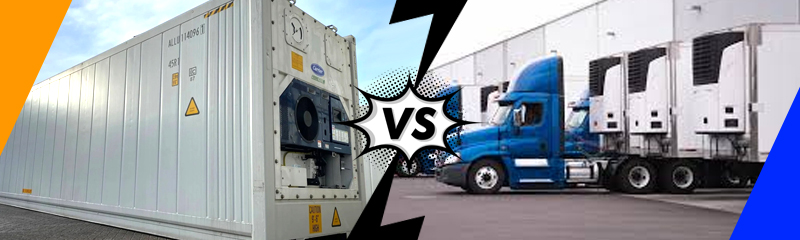
Reefer containers are typically used for ocean or intermodal shipping and come with a built-in cord and a male pin-and-sleeve plug, usually 440/480V 3-phase, 32A (IEC 60309). These cords are often visible coiled in a tray or hook on the container’s side. The container itself is a self-contained metal unit, similar in appearance to a standard shipping container, often 20 or 40 feet long.

Electric Transport Refrigeration Units (eTRUs): The Overland Option

Electric Transport Refrigeration Units (eTRUs), on the other hand, are usually mounted on trailers or trucks. Instead of a cord, they are equipped with a male inlet mounted on the unit’s exterior. The cord with the female connector is provided at the power source (dock, pedestal, or building).

Visually, eTRUs blend into the body of the trailer or appear as nose-mounted units on the front wall. At first glance, they may look like conventional diesel-powered TRUs, but the giveaway is the small inlet plate or recessed power port replacing the familiar fuel tank.

Quick visual differences:

  • Reefer Containers: Large, box-like units with a coiled power cord and male plug. Often have corner castings for stacking/shipping.
  • eTRUs: Mounted on trailers, often with no external cord. Look for an inlet plate or recessed power port on the side or front of the unit.

Why This Matters for Electrical Quotes

It’s important to note that not all containers or eTRUs use the same standard configuration. Some may have non-standard connectors or voltages depending on origin, manufacturer, or retrofit. Since pricing and product selection can vary significantly depending on the required connector or receptacle, confirming the exact electrical configuration — including voltage, phase, amperage, and plug type — helps avoid misunderstandings and ensures a safe, cost-effective solution.

Photos of the connection point, nameplate data, or equipment specifications are very helpful in making the correct selection.

If you’re looking for further assistance or ready for a project quote, Contact our team now!

RAMTEK Joins ESL as the Newest Manufacturer’s Representative Group for Southern California

CORONA, CA – April 10, 2025 – ESL Power Systems, Inc. is excited to announce that RAMTEK has joined our growing network of Manufacturer’s Representative Groups (MRGs). As our newest MRG, RAMTEK will represent ESL’s Emergency Power Product line throughout Southern California.

About RAMTEK

Founded in 1999, RAMTEK has built a strong reputation as a premier manufacturer’s representative firm specializing in electrical, energy, industrial, mechanical, and OEM markets. With over 25 years of power industry experience, RAMTEK provides exceptional customer service, technical expertise, and tailored solutions in vertical markets such as emergency power & energy, data center, healthcare, entertainment, biotech and higher education. RAMTEK is positioned to meet the needs of contractors, distributors, and end users. Their dedication to innovative and reliable power solutions aligns seamlessly with ESL’s mission to deliver high-quality products for critical power applications.

A Strong Partnership for Emergency

ESL’s partnership with RAMTEK strengthens our ability to serve customers in Southern California by providing localized support and expertise in Emergency Power Connection Solutions. RAMTEK’s established industry relationships and deep market knowledge will enhance ESL’s reach and ensure customers receive best-in-class service and solutions for their power connectivity needs.

Looking Ahead

We are confident that this collaboration will provide greater accessibility, technical support, and tailored solutions to our valued customers in the region. ESL is thrilled to welcome RAMTEK to our expanding network of trusted partners.

For more information about RAMTEK, visit their website at ram-tek.com.

For inquiries or project quotes on ESL’s Emergency Power product line, visit our representative map to locate the suitable representative for your project.


Media Contact:
Erika Thorson, Marketing Manager
ethorson@eslpwr.com

Understanding 2023 NFPA 70B

The National Fire Protection Association (NFPA) 70B standard sets forth standards for “Electrical Equipment Maintenance”.  In its 2023 edition, chapter 9 of NFPA 70B transitions from a “Recommended Practice” to a more structured “Standard” with a heightened emphasis on mandatory compliance. However, unlike the National Electric Code (NEC), which is adopted by states as law, NFPA 70B is not directly mandated by law and should be regarded as a foundational guideline for ensuring electrical safety.

NFPA 70B aims to establish an Electrical Maintenance Program geared towards enhancing safety and reliability. The 2023 edition of NFPA 70B introduces new classifications for physical conditions of equipment (referred to as Levels 1, 2, and 3), which dictate the frequency of maintenance, ranging from 6 to 60 month intervals, contingent upon the product category.

When conducting maintenance, it is always advisable to adhere closely to the recommendations and instructions provided by equipment manufacturers, as this represents a best practice approach to ensure optimal performance and safety.

How does ESL’s equipment help comply with NFPA 70B?

When using portable generators in conjunction with an ESL StormSwitch®, TripleSwitch®, DualConnect™, or RotaryConnect™ system, it’s essential to ensure seamless operation.  To do so, first disconnect the portable generator from the ESL unit.  Then, connect a portable load bank to the portable generator in accordance with the generator manufacturer’s recommended maintenance instructions. This ensures efficient and reliable performance of the generator. For permanent generators integrated with an ESL TripleSwitch® or DualConnect™ system, a similar approach applies. In this case, simply connect a portable load bank to the output CAMs on the ESL unit, adhering closely to the generator manufacturer’s maintenance guidelines. This step facilitates optimal functioning and longevity of the generator setup within the ESL system.

To contact ESL for additional questions or a quote, click here.

ESL Power Systems Expands Partnership with LaSalle Representatives to Cover Additional States

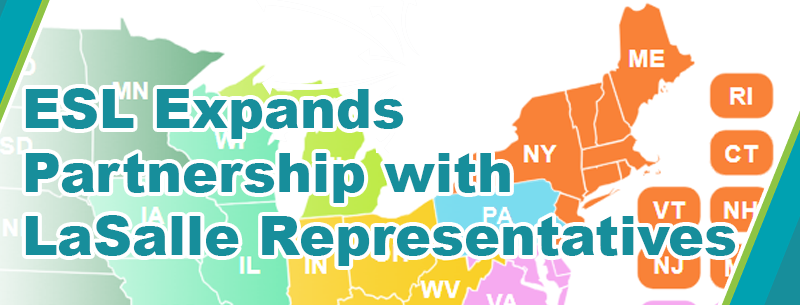
ESL is thrilled to announce a significant expansion in our collaboration with LaSalle Representatives, one of our esteemed manufacturer representatives. LaSalle has been a key player in our network, serving the New Jersey and New York regions with unparalleled dedication. Now, we’re excited to extend their coverage to include Connecticut (CT), Maine (ME), Massachusetts (MA), Rhode Island (RI), Vermont (VT), New Hampshire (NH), and the entirety of New York (NY).

LaSalle Representatives has already proven their commitment to excellence by providing exceptional service in New York Counties, including Bronx, Queens, Manhattan, Kings, Richmond, Suffolk, Nassau, Suffolk, Westchester, Rockland, Putnam, and Orange. Their sales team boasts a rich history in the competitive NYC Metro Market, offering smart, sensible, and cost-effective solutions to our valued customers.

What sets LaSalle apart is their diverse team, comprised of individuals with backgrounds working directly for manufacturers, local distributors, and hands-on field experience. This unique blend enables them to collectively deliver the best service and support for each application, ensuring that our customers receive top-notch assistance.

As ESL Power Systems continues to grow and innovate, we actively seek out the best manufacturer representatives to join us in providing cutting-edge Emergency Power and Entertainment Power Solutions. LaSalle Representatives exemplifies excellence in embracing this opportunity, showcasing a deep understanding and expertise in ESL’s product lines. We take pride in our nationwide network of manufacturer representatives who offer technical expertise and customer service support. To discover the right representative for your state, we invite you to explore our representative map here. At ESL Power Systems, we are dedicated to powering your success and ensuring that you receive the highest level of support for your power solutions needs.