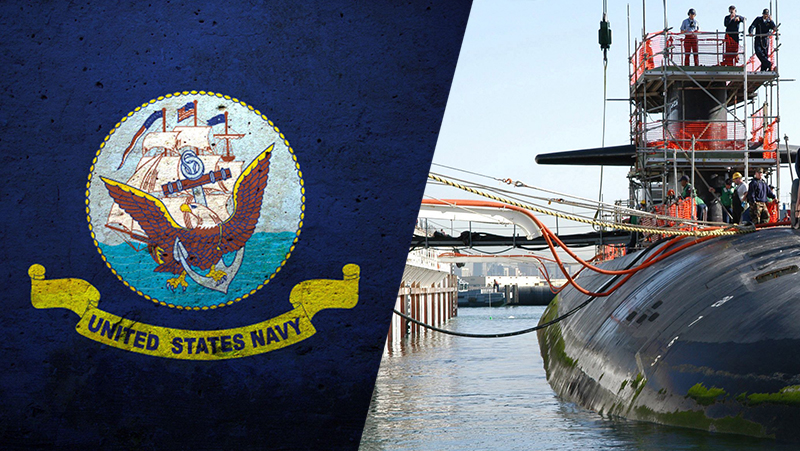
How Ships and Ports Integrate Clean Energy with Shore Power Connections

Modern ports are under increasing pressure to reduce emissions, meet regulatory standards, and improve sustainability. A shore power connection, sometimes called cold ironing or onshore power supply, enables docked vessels to plug into the local electrical grid instead of running their diesel engines.

This shift is more than a compliance requirement. It’s the foundation of port electrification. By adopting shore power, ports cut harmful emissions, reduce noise pollution, and deliver cleaner operations for surrounding communities. For vessels, the benefits are just as important, including lower fuel use, reduced maintenance, and easier compliance with evolving standards like CARB’s Shore Power Rule

The Cost of Getting It Wrong

While the advantages of shore power are clear, the risks of a poor implementation can be costly. Choosing the wrong system or underestimating compliance requirements may result in:

  • Delays and rework if systems fail to pass inspection.
  • Operational downtime when equipment isn’t engineered for heavy-duty port conditions.
  • Unexpected costs from non-standard components or proprietary connectors.
  • Regulatory penalties if ports or vessels fall short of emissions rules.

At a busy port, there’s no room for error. If a shore power connection fails, ships can’t run as planned and valuable cargo could be delayed or put at risk.

What to Look for in a Shore Power Solution

A port-ready solution should be engineered for safety, durability, and compliance. When evaluating a shore power connection, consider:

  • Regulatory compliance: Systems should meet CARB, IMO, NEC 555, and IEEE 80005 requirements.
  • Safety features: Look for interlocked connectors and clear field labeling.
  • Durability of design: Corrosion-resistant enclosures and weatherproof construction are essential.

Plan Your Shore Power Project With Confidence

Download our Commercial Shore Power Brochure to see features, compliance details, and planning tips.

Planning for Growth and Changing Regulations

Shore power isn’t just about meeting today’s rules. It’s about preparing for the future. Emissions standards are getting tougher, and more ports are moving toward zero-emission operations. By planning with customizable, expandable systems, ports can adapt to new vessel requirements, higher power needs, and stricter regulations without starting over.

Ports that plan ahead also gain an advantage. A strong shore power infrastructure makes them more attractive to shipping lines that are focused on meeting sustainability goals.

How ESL Simplifies Shore-to-Ship Integration

At ESL, we design and manufacture shore power connection systems that streamline electrification without compromise. Our solutions are:

  • Custom-engineered for each facility’s requirements.
  • Built for compliance, meeting CARB, IMO, and NEC standards.
  • Safety-focused, with interlocked connectors and built-in test points.
  • Scalable, with expandable configurations that adapt to future vessel needs.
  • Proven in the field, trusted by commercial, military, and cruise facilities across North America.

With more than 30 years of experience and over 300,000 connection points deployed, ESL helps ports, terminals, and engineering firms integrate shore power with confidence.

Power Your Port with Confidence

Don’t risk delays, downtime, or costly compliance failures. Partner with ESL for a shore power connection solution engineered to meet your specs, emissions goals, and growth plans.
California Transport Refrigeration Unit Regulations in Development

Pending TRU California Regulation

Pending TRU regulations will require that diesel engines be phased out over the next six years in an effort to help improve the environmental impact of the trucking industry. Facility and fleet operators should consider options to reduce emissions at their facilities.

Truck Refrigeration Units, commonly referred to as TRUs, are refrigeration systems that are typically powered by internal combustion engines. TRUs control the environment of temperature-sensitive products that are transported in refrigerated trucks, trailers, railcars and shipping containers. TRUs are used to transport and store many products such as food, pharmaceuticals, plants, medicines, and chemicals.

Some companies use TRUs for extended cold storage. Distribution centers and grocery stores may run out of cold storage space in their buildings and then opt to store overflow goods in TRU-equipped trucks and trailers outside their buildings. Distribution centers, truck stops and other cold storage facilities also attract large volumes of TRUs that contribute to higher localized health risks. New regulations are developing concepts to reduce emissions from facilities with TRU activity by transitioning to zero-emission operation where practical.

According to SCE.com, Southern California Edison is aiding in these pending regulations by offering a program designed to help qualifying SCE commercial customers install the charging/powering infrastructure needed to electrify medium- and heavy-duty fleets. SCE’s Charge Ready Transport Program is providing a funding initiative for installation of infrastructure to SCE commercial customers. Through this program, SCE’s goal is to advance the vision for a clean energy future while providing medium- and heavy-duty fleet owners the opportunity to save money. The program is offering opportunities such as, no-cost installation of electric infrastructure or giving businesses the option to install, own, operate and maintain the infrastructure on site for a rebate at 80% of cost. SCE is also offering special incentives such as commercial rate options that make EV charging and TRU shore power more affordable during certain times of the day.

In addition to SCE’s infrastructure programs, CARBs Clean Off-Road Equipment Voucher Incentive Project (CORE) offers a streamlined voucher process for buyers to receive funding to offset the adoption costs of clean, commercial ready zero-emission equipment including transport refrigeration units, cargo-handling equipment, and more. CARB also offers eligibility opportunities to offset electricity costs through the Low Carbon Fuel Standard (LCFS) Program which is designed to encourage the use of cleaner low-carbon fuels in California, encourage the production of those fuels, and therefore, reduce greenhouse gas emissions.

Charge Ready Transport, LCFS and CORE are some of the many incentives available in California that provide opportunities to reduce your organization’s carbon footprint and improve the air quality of your community all while cutting operation and maintenance costs to your fleet.

Get ahead of the competition; learn more about SCE’s Charge Ready Transport and reducing greenhouse gas emissions here: https://www.sce.com/business/electric-cars/charge-ready-transport.

If you’re interested in learning how ESL can help provide safe utility power to electric or hybrid TRUs check out our eTRUconnect:  https://eslpwr.com/etruconnect/

ESL Power Systems, Inc. Partners with France Based Company PROCONECT

CORONA, California, July 2022 – ESL Power Systems, Inc. is pleased to announce an exclusive distribution agreement with PROCONECT, a French manufacturer specializing in industrial connectors. This partnership will allow ESL to utilize and distribute PROCONECT’s premier low and medium voltage push-pull receptacles and plugs; harnessing the expertise from both companies and providing advanced Shore Power Solutions for Cruise, Ferry, Ports and Container Terminals across all Americas.

Together, ESL and PROCONECT will offer safe, proven technology that is reliable, durable, and heavy duty for marine grade applications; in addition to offering compliance with local electrical regulations and codes.

This agreement grants ESL exclusive distribution in the Americas of PROCONECTs products for marine applications such as electrification of container handling equipment (ERTGs, RMGs, STS), and shore power for containers, ferries, cruise terminals and other types of vessels. ESL’s expertise and footprint in the market will offer PROCONECT customers local stock, support, and technical assistance.

PROCONECT CEO, Béatrice Barokhel states, “We are excited to be working with ESL and expanding PROCONECT’s reach for the port and maritime industry to the Americas. ESL’s custom solutions, excellence in customer service and dedication to innovation fall in line with PROCONECTS mission to serve our customers in a market that demands performance, timely delivery, and cost value.”

ESL President, Marcelo Gonzalez shares PROCONECT’s excitement. “We couldn’t be happier to work with a European company that supplies such a quality product to the port and shore power markets. We at ESL believe this partnership will provide our customers with the absolute best in quality connection for marine environments.”

For additional information or a project quote contact ESL’s Sales Team at: info@eslpwr.com

About ESL Power Systems, Inc.
A 100% employee-owned company located in Corona, CA, ESL Power Systems, Inc. is an innovative global leader in the design and manufacturing of cord-connected electrical equipment for industrial and commercial applications and is known as best-in-class builders of Ship-to-Shore Power Equipment. ESL works with customers globally to build custom engineered solutions for commercial and military applications such as: Cruise Lines, Ferry Terminals, Navy/NATO Ships & Bases, USCG Ships & Bases, and Container Ships & Ports Barges.

About PROCONECT
Created in 1981, PROCONECT is a French company located in Orvault, France that specializes in the conception of industrial connectors. Thanks to its high interest for Research and Innovation, PROCONECT is a very dynamic, creative and speed reactive company serving a market with high demand in performance, cost, and delivery time. ISO 9001 certified since 1998, PROCONECT is also registered as a NATO supplier.

Sourcing Wayside HEP Power Systems for Rail Yards

thumb

Head End Power Unit Configurations for Passenger Trains

In the late 1990s, the American Public Transportation Association (APTA), implemented practices for Head End Power sources throughout the passenger rail industry.

According to 3.1.3 in APTA RP-R-015-99, Head End Power (HEP) is defined as “A system by which 480 VAC 3-phase electrical power, to operate auxiliaries, is provided to railroad vehicles from a central source via a trainline system. The power source can be locomotive (hence “Head End”), power car, or wayside source.” Read more

Portable Submarine Shore Power Hook-up Assemblies

Submarine Hook-up assemblies blog

For over 20 years, ESL has worked with the US Military worldwide to build custom engineered solutions for power distribution assemblies and ship-to-shore power applications.

The U.S. Military has been using Shore Power technology for decades. Sometimes referred to as cold-ironing, shore power enables ships to shut off their engines while in berth and plug into land-based power, thereby reducing on-board manpower requirements while in port.

ESL has manufactured 1600A 480V portable Submarine Hook-up assemblies designed to connect submarines to shore power while docked.  With Navy approved single pole 690A/600V receptacles, these assemblies serve as a safe connection/distribution point between the facility’s sub-station and the submarine shore power cable. ESL’s Submarine Hook-up assembly is built for compliance with NAVFAC E-SAFE PWBL-009 and 0010 480V Submarine Connect and Disconnect Operating Procedures.

Features include:

  • Internal common bus to minimize circuit imbalance
  • Overload and short circuit protection via 400A 480V circuit breakers (100% rated with shunt trip and aux contacts)
  • (8) 3 phase stainless-steel receptacle plates with 690A 600V rated 1-pole receptacles
  • Emergency stop buttons
  • Surge protection
  • Thermostat controlled dehumidistat/heaters

Constructed of sturdy and durable 12GA 304 stainless steel powder-coated (in compliance with IEEE C57.12.29 coating requirements), the Submarine Hook-up assembly is built to resist corrosion and abuse. Designed with the flexibility to move from one location to the next, this assembly comes with stainless steel pad eyes, steel I-beam base with forklift pockets and protective cage for enhanced portability. ESL’s 1600A 480V Submarine Hook-up assembly can be NRTL field labeled.

As a leading manufacturer of military shore power equipment, ESL strives to provide maximum utility in the smallest footprint possible. View ESL’s Shore Power Catalog for a sampling of ship-to shore products ESL has provided the US military.

Interested in past Shore Power projects? Read: U.S. Military Facility Outfitted with Shore Power Mound Assembly & Voice-Data Outlet Station